
Legal Gaming Variety Is Expanding in Turkey, but the Risk Debate Is Growing
By Erdem / 24/05/26
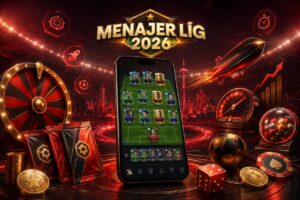
Turkey’s licensed betting and lottery market is moving beyond traditional sports betting, lottery draws and horse racing. A new layer of digital products is now entering legal platforms, combining virtual football, card collection, instant-win mechanics and highly repeatable game loops. Playbook Football, offered locally under the Menajer Lig name, is one of the clearest examples of this shift.
This expansion can support the legal market and give users safer alternatives to offshore betting sites. Yet the direction of that expansion matters. If product innovation is driven mainly by games of chance, instant results and repeated play, the legal market may create a new public-health problem while trying to solve the illegal betting problem. The real challenge is not whether legal platforms should offer variety. They should. The challenge is whether that variety is built around transparent, well-supervised and lower-risk formats rather than faster and more addictive gambling loops.
Playbook Football Enters Turkey as Menajer Lig
Playbook Football is a product developed by Playbook Fusion. Internationally, it is promoted as a virtual football management and betting game. In Turkey, the same model is presented to users under the name Menajer Lig 2026. The product has appeared on major licensed Turkish platforms through the 106 Dijital distribution channel, which operates within the legal lottery and digital games framework.
The product is important because it does not look like a conventional sports bet. Users do not simply predict the outcome of a real football match. Instead, they build a virtual team, open player packs, improve team strength and take part in simulated football matches. The game uses real football imagery and player-style ratings to create a management experience, but the betting element remains central.
This makes Menajer Lig a hybrid product. It borrows the language of fantasy football and football management games, but it also contains betting markets, odds, stake amounts and prize mechanisms. For that reason, it should not be treated as a harmless sports game. It is better understood as a gamified betting product built around a virtual football simulation.
The Turkish launch also matters from a market perspective. Menajer Lig is not a one-off experiment on a single website. It appears to be part of a broader push to add new digital gambling products to legal platforms. That development deserves careful attention, because legal visibility can make a product feel safer even when it still carries gambling-related risks.
How Menajer Lig Is Played
The basic structure of Menajer Lig is simple from the user’s point of view. A player creates or receives a virtual football squad, strengthens the squad with player packs and then enters simulated matches against other virtual teams. The game presents team strength through different performance indicators such as attacking power, creativity, defence and team chemistry.
Before a match begins, users can place bets on markets linked to the simulated match. These may include match result, both teams to score and goal-scorer style markets. After the bet is placed, the user can either watch the simulated match or move directly to the result.
This structure creates a powerful sense of involvement. The user is not only placing a bet, but also building a squad and trying to improve it. That design can make the product feel more strategic than a standard instant-win game. However, the final result is not tied to a real football match taking place in the outside world. It comes from a virtual match environment built inside the product.
This distinction is essential for readers. Menajer Lig may contain team selection and strategy elements, but it still asks users to risk money or platform credit on uncertain outcomes. The presence of football data, player cards and squad development does not remove the gambling dimension. In fact, these features can make the game more engaging and may increase session length if not controlled properly.
The product therefore sits between several categories:
- Football management game, because users build and improve a squad.
- Virtual sports product, because results come from simulated matches rather than live football fixtures.
- Betting product, because users stake money or credits on uncertain outcomes.
- Gamified retention product, because packs, rewards, leagues and progression systems encourage repeat engagement.
Legal Turkish Sites Offering Menajer Lig
The Turkish rollout shows how quickly a product of this type can spread once it enters the licensed distribution network. Publicly available information confirms that Menajer Lig or Playbook Football has been connected with several legal Turkish platforms.
- Bilyoner: Menajer Lig is presented as a virtual football management and betting game. The platform explains team building, player packs, betting markets and simulated match play in detail.
- Misli: Playbook Fusion announced that Playbook Football went live with Misli in Turkey, describing it as part of the product’s local rollout.
- Nesine: Playbook Fusion announced that the product was launched with Nesine through 106 Dijital under the national lottery regulatory structure.
- AltılıGanyan: Menajer Lig 2026 appears within the platform’s digital chance games environment, alongside other fast digital games.
- Atyarışı.com: The product is also visible in the wider digital chance games ecosystem connected with licensed horse racing and lottery platforms.
More Turkish brands may follow. Playbook Fusion has indicated that the Turkish rollout is broader than a single operator launch, and the structure of the 106 Dijital agreement suggests a distribution model rather than a closed partnership. This is why the issue should be treated as a market trend, not only as a product launch.
The key point is that the product is entering platforms already trusted by legal users. That gives regulators and operators a greater responsibility to explain how the game works, how outcomes are determined, how risks are communicated and what limits are available to users.
International Operators Offering Playbook Football
Playbook Football is not a Turkey-only product. The game has also been promoted or launched with major international betting brands. This matters because it shows that Turkey is importing a wider global trend in gamified betting products.
International names connected with Playbook Football include:
- bet365: One of the world’s best-known betting operators, linked with Playbook Football in international launch announcements.
- Ladbrokes and Coral: Major UK-facing brands under the Entain ecosystem, associated with the early international rollout.
- LiveScore Bet and Virgin Bet: UK and Nigeria-facing launches have been referenced in Playbook Fusion announcements.
- Betano: The product has been connected with Betano in Brazil, a key growth market for international betting groups.
- Superbet: Another international operator linked with the product in Brazil.
- Bingoal: The product has also been introduced in the Netherlands through a regulated local operator.
These names are useful for understanding the scale of the product. However, they should also be explained carefully for Turkish readers. A brand may operate legally in the United Kingdom, Brazil, the Netherlands or another regulated market, but that does not make the same brand legal in Turkey. For Turkish users, betting operators that are not licensed within Turkey’s legal system remain unauthorised and illegal even if they are well-known internationally.
This distinction is important for the article’s balance. International markets may be more mature in terms of product testing, safer gambling tools and public reporting. Turkey, on the other hand, still faces a much more difficult environment, where illegal betting is widespread and the legal market is under pressure to compete through new products. That pressure should not lead to weaker oversight.
Zeplin, Altın Çark and the Rise of Fast Digital Chance Games

Menajer Lig is only one part of a broader shift. Turkish legal platforms have also been increasing the number of fast digital chance games. Examples include Zeplin, Altın Çark, Cesur Tavuk (Cross Chicken), Plinko, Mayın Tarlası (Mines), Hazine Yolu (Totem) and similar instant or near-instant games. These products usually rely on simple rules, quick outcomes and repeated participation.
Altın Çark, for example, is based on a wheel mechanic. Users choose a stake level, spin the wheel and receive a result quickly. Cesur Tavuk uses a risk-reward format in which the player continues step by step while the potential multiplier increases. Zeplin-style games usually revolve around a rising multiplier and the need to exit before the round collapses.
The commercial appeal is obvious. These games are easy to understand, mobile-friendly and capable of producing many rounds in a short period. They also fill the time between sports events and help platforms keep users active when there is no live match to bet on.
That is exactly why they should be treated with caution. Fast game cycles, instant feedback, near-miss feelings, multipliers, auto-play options and the urge to recover losses can all increase risk. A product can be legal and still be harmful if it is designed around speed, repetition and emotional decision-making.
International public-health guidance consistently warns that gambling harm is not limited to illegal markets. Online access, fast products and high-frequency gambling environments can contribute to financial stress, family harm, mental health problems and addiction. Turkey should not wait for these harms to become larger before building stronger safeguards.
The core concern is that legal operators in Turkey are expanding mainly through chance-based games. Instead of creating a healthier alternative to illegal betting, the legal market may be moving toward a denser and faster gambling environment.
Skill-Based Alternatives Deserve More Attention
Game variety is not a problem by itself. A stronger legal market needs variety, better entertainment value and products that can pull users away from offshore sites. The problem is the direction of that variety. If every new product is another fast game of chance, the legal market becomes broader but not necessarily safer.
Skill-based or knowledge-based formats should receive more attention. Fantasy sports betting is one possible reference point, although it should not be presented as a risk-free solution. Fantasy sports can involve research, squad selection, long-term performance tracking and sports knowledge. When designed with slower cycles, clear limits and low-frequency contests, such products can have a different risk profile from instant RNG-style games.
The important nuance is that fantasy sports also carries risks. Research on paid fantasy sports and daily fantasy sports has shown links with broader gambling participation and gambling-related problems among some users. Some people begin with fantasy sports and later move into more intensive gambling behaviours. That evidence should not be ignored.
Even so, there is a meaningful difference between a slower, analysis-based contest and a rapid game built around instant outcomes, multipliers and repeated rounds. Turkey’s legal operators do not need to avoid innovation. They need to innovate in ways that do not push users toward faster and more compulsive gambling patterns.
A healthier product strategy would give more space to:
- Knowledge-based sports contests with transparent scoring systems.
- Longer-cycle fantasy formats that reduce rapid repeat play.
- Low-stake social competition that does not depend on instant losses and wins.
- Clear responsible-gaming tools built into the product by default rather than hidden in account settings.
- Strict limits on speed, auto-play and loss chasing across all chance-based products.
Turkey’s Legal Market Needs Variety Without Creating a Larger Risk
One argument in favour of new legal products is strong. Turkey has a major illegal betting problem, and the legal market must be attractive enough to compete. If licensed platforms offer only limited and outdated products, many users will continue to search for offshore alternatives. Product variety is therefore part of the fight against illegal betting.
However, this argument has limits. The legal market should not copy the most addictive features of offshore gambling in order to compete with it. A safer legal market must offer variety with stronger controls, clearer rules and more transparent risk communication.
International operators that offer Playbook Football often operate in markets with more developed licensing frameworks, testing requirements, safer gambling standards and public oversight. That does not mean those markets are perfect. It does mean the product is usually placed inside a more structured regulatory environment.
Turkey’s situation is more fragile. Illegal betting remains widespread, public trust in enforcement is uneven and many users do not clearly understand the difference between legal, illegal, chance-based, skill-based and virtual sports products. In such an environment, launching more chance games without stronger public explanation can increase confusion and risk.
The issue is not that Menajer Lig or similar products should automatically be rejected. The issue is that they should be launched with a higher standard of transparency. Users should understand whether they are betting on a real match, a virtual simulation or an RNG-supported outcome. They should also understand the role of player cards, team ratings, odds, prizes and loss limits.
Transparency and Oversight Must Come Before Faster Expansion
The growth of Playbook Football, Menajer Lig and fast digital chance games should push Turkey toward a more serious public discussion about regulation. The legal market cannot be judged only by whether a product is licensed. It must also be judged by how clearly the product is explained, how independently it is tested and how strongly users are protected.
Several standards should become normal for this category:
- Clear product classification: Users should know whether a game is a virtual sports product, a chance game, a betting product or a skill-based contest.
- Visible outcome explanation: Platforms should explain whether results come from real events, simulation models, RNG systems or a combination of inputs.
- Independent testing information: Certification, testing dates and responsible testing bodies should be easy to find.
- Transparent odds and return information: RTP-style information, prize structures and probability explanations should be presented in plain language.
- Stronger player protection: Deposit limits, loss limits, cooling-off tools, self-exclusion and risk alerts should be prominent and easy to use.
- Restrictions on high-risk mechanics: Auto-play, extreme speed, aggressive multipliers and loss-chasing prompts should be limited or removed.
Turkey needs a stronger legal market, but a stronger legal market does not simply mean more games. It means better-supervised games, clearer product design and a regulatory approach that protects users before harm becomes visible.
Playbook Football’s arrival in Turkey shows how quickly global gaming trends can enter the local legal market. The same trend is visible in Zeplin, Altın Çark, Cesur Tavuk and other fast digital chance games. The legal sector is expanding, but expansion alone is not enough. Without transparency, independent oversight and a broader move toward genuinely skill-based alternatives, the legal market may end up creating a more sophisticated version of the very risk it is supposed to reduce.