
Gambling Addiction Is Surging In Turkey: A Growing Public-Health Debate
By Erdem / 16/02/26
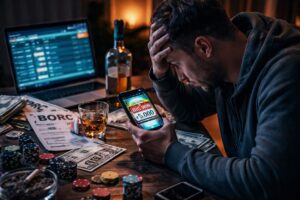 Gambling addiction in Turkey has become one of the country’s fastest-growing addiction-related problems in recent years. The issue is no longer limited to “people who place a bet.” It increasingly overlaps with debt spirals, family breakdown, lost jobs or schooling, mental-health crises, and—at its worst—links to criminal networks and the shadow economy. The clearest signal is the number of people actively seeking help: applications to Yeşilay’s counselling network (YEDAM) for gambling-related problems have risen sharply in a short period of time.
The drivers behind this surge are also increasingly clear: 24/7 access via smartphones, the aggressive expansion of illegal betting sites, economic pressure that makes “quick money” narratives more attractive, and exposure that starts at younger ages than many families expect.
Why Are “Record” Figures Being Reported?
The headline trend is about treatment demand, not a precise count of how many people in Turkey have gambling disorder. Still, the growth in help-seeking is striking.
Applications to YEDAM for gambling-related treatment rose from 2,140 in 2021 to 5,812 in 2024. In 2024, gambling-related applications (5,812) surpassed applications related to alcohol and drugs combined (5,528)—a milestone that helps explain why many observers describe the situation as “record-breaking.”
Another important data point highlights a hidden side of the problem: only 2.6% of gambling-related applicants were women. That does not mean women face no risk. It more strongly suggests a mix of stigma, hidden or solitary gambling patterns, and hesitation to seek formal help.
Why So Few Women Seek Treatment
The gender gap in applications is one of the most important signals in the data. When only 2.6% of applicants are women, the core issue is likely barriers to help-seeking, not the absence of harm.
Common explanations include:
-
Stigma: The fear of being judged more harshly than men.
-
Hidden Gambling Patterns: More solitary, private routines that are harder for families to notice.
-
Care Burdens And Guilt: Cultural expectations can make asking for help feel “selfish” or shameful.
This is why tackling gambling addiction is not only about shutting down websites. It also requires reducing stigma and ensuring safe, confidential access to treatment.
Why Does Online Gambling Hook People So Fast?
Gambling addiction is often framed in moral terms—“weak willpower” or “bad influences.” But modern gambling ecosystems, especially online, are deeply shaped by behavioural design and frictionless payments.
Three mechanisms are especially relevant:
-
Variable Reward Loops: Not knowing when you’ll win keeps the brain chasing the next attempt.
-
Near-Miss Effects: “I almost won” can be motivating—even after repeated losses.
-
Frictionless Deposits: A few taps to deposit, play, claim bonuses, and return to the game can weaken self-control and shorten the time between impulse and action.
In other words, gambling today often functions less like a “game” and more like a designed attention-and-money machine built to keep users engaged.
Is The Starting Age Dropping Below 15? What We Actually Know
Public discussion in Turkey sometimes claims that “gambling addiction has dropped to age 14.” The best available figures don’t confirm a single, definitive age like 14—but they do support the broader concern: first exposure is happening earlier and risk is concentrated among young people.
Two points are clear:
-
The starting age clusters heavily in youth: 71.2% of people who gamble report starting between 15–24.
-
There is also a measurable “15 and under” group: 3.3%.
That doesn’t mean every one of those younger individuals has a clinical addiction diagnosis. But it does indicate that gambling initiation can reach into early adolescence.
A key reason the risk grows is that many children and teens don’t encounter gambling “directly” at first. They often meet it through adjacent digital habits: randomised in-game rewards, loot-box style mechanics, influencer-driven “easy money” content, and online communities that normalise betting language. These pathways can make gambling feel like just another form of entertainment—until it isn’t.
Why Illegal Betting Remains So Powerful
It’s impossible to explain Turkey’s gambling addiction debate without talking about illegal betting. The illegal market’s advantage is straightforward:
Unlimited variety + aggressive promotions + weak oversight.
Illegal sites can be shut down, but many return quickly through new domains and mirror platforms. Official enforcement data shows the scale of this “whack-a-mole” cycle: takedowns are frequent, yet the market adapts fast—especially as mobile use expands.
More importantly, the illegal market isn’t just “offering games.” It often uses practices that can deepen addiction: bonus offers designed to pull users back, personalised deals, persistent calls or messages, and “loss recovery” narratives that push people to chase what they’ve already lost. That turns gambling from entertainment into a system that pulls users deeper into stress, debt, and repeated play.
Advertising And Normalisation: A New Chapter?
One of the sharpest policy debates revolves around advertising. On one side is the argument that legal platforms need controlled visibility to compete with illegal operators. On the other side is the public-health concern that wider promotion—especially in sports-linked media—can accelerate normalisation, particularly among younger audiences.
In Turkey, a recent regulatory change (reported in mid-February 2026) gave the national betting authority the ability to commission marketing and promotion for legal online betting platforms under strict conditions—such as restricting placements to sports-focused channels and prohibiting encouragement of under-18s.
Supporters say this could help redirect demand away from illegal sites. Critics warn that once advertising expands, the cultural message can shift toward “betting is normal,” and that public-health safeguards must be strong enough to prevent exactly that.
Turkey’s Legal Landscape: A Monopoly, Limited Legal Products, A Vast Illegal Market
Turkey’s legal gambling framework is tightly restricted. Sports betting operates under a monopoly structure widely associated with the İddaa system. Separate from that, Milli Piyango Online provides state-licensed lottery-style products and other authorised digital games. Outside these officially sanctioned channels, a large number of betting and “online casino” style offerings are considered illegal.
And this is where the central contradiction becomes visible: bans and access blocks exist, yet addiction is still rising.
Legal platforms offer more limited product variety and promotional intensity, while illegal operators compete with near-limitless options and highly aggressive retention tactics. The result is a daily reproduction of the same reality: “The market is restricted, but demand doesn’t disappear.”
This has fuelled a strong critique: in gambling and betting, bans alone may not work. People keep playing—only they are pushed into a space that is more dangerous, less transparent, and more manipulative. Some advocates argue that if Turkey moved toward a tightly regulated open market—while enforcing strict public-health rules—harmful patterns could be identified earlier through identity verification, transparent data monitoring, and mandatory loss limits, making addiction easier to detect and intervene on. Others counter that expanding legal supply and advertising could increase overall participation and harm unless regulations are exceptionally strict.
What remains undeniable is the current snapshot: Turkey’s legal market is narrow and tightly controlled, yet a vast illegal market continues to attract users—and some become addicted despite the prohibitions. This suggests that whichever model policymakers prefer, the system needs stronger oversight, better data-led detection, and a public-health-first approach powerful enough to reduce harm in the real world—not only on paper.