
Unlicensed Betting Companies Continue to Sponsor Premier League Clubs
By Erdem / 20/09/26
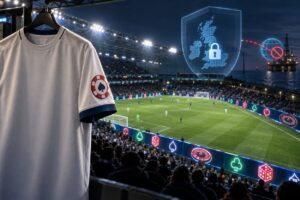
Betting companies have disappeared from the front of Premier League shirts this season, but gambling sponsorship remains highly visible across English football. Operators without a Gambling Commission licence to serve customers in Great Britain continue to appear on shirt sleeves, training wear, stadium advertising and other commercial assets used by Premier League clubs.
Entain, the owner of Ladbrokes and Coral, says 11 of the Premier League’s 20 clubs have sponsorship or advertising arrangements with gambling operators that do not hold a Gambling Commission licence. That represents a sharp increase from the 2025/26 season, when the UK government estimated that approximately 40% of Premier League clubs, equivalent to eight teams, had deals with unlicensed operators.
The current number could be higher than Entain’s list suggests. Leeds United confirmed on 11 September that it had extended its relationship with 8XBet for the 2026/27 Premier League season, giving the operator Official Asian Betting Partner status and matchday branding around Elland Road. Leeds was not included among the 11 clubs named by Entain one week later, so applying Entain’s stated criteria to the confirmed Leeds agreement takes the identifiable total to at least 12 Premier League clubs.
Gambling Sponsorship Has Moved Beyond the Front of the Shirt
Premier League clubs agreed in April 2023 to remove gambling companies from the front of matchday shirts after the 2025/26 season. The voluntary measure took effect this season, making 2026/27 the first Premier League campaign without gambling operators as front of shirt sponsors.
The agreement did not create a general ban on gambling sponsorship. Betting brands can still appear on sleeves, training kits, stadium advertising and perimeter boards, while clubs remain free to sign regional commercial partnerships aimed at markets outside Great Britain.
That distinction has become increasingly important during the first months of the new system. Everton has maintained a commercial relationship with Stake through sleeve sponsorship, Fulham has shifted its SBOTOP relationship away from the main shirt, and Tottenham Hotspur signed a three year agreement with VSBet in August that made the operator its Official Regional Betting Partner for Asia. The wider picture shows that the Premier League’s rule has changed where gambling brands appear, rather than removing them from the competition altogether.
Stadium advertising provides another route to global exposure. Clubs can promote betting partners through LED boards and other matchday assets that regularly appear in domestic and international broadcasts, even when the underlying commercial agreement is targeted at audiences in Asia or other overseas markets. Entain says the arrangements it identified include shirt sleeves, training kits, stadium branding and perimeter advertising.
Seven Unlicensed Betting Brands Are Linked to 11 Clubs
Entain identified seven gambling brands without a Gambling Commission licence across 11 Premier League clubs. Its list includes Everton with Stake, Fulham with SBOTOP, Chelsea with 8XBet, Tottenham Hotspur with VSBet, Ipswich Town with 8XBet, Nottingham Forest with FUN88, Crystal Palace with CHEXX, Coventry City with 8XBet, Aston Villa with 8XBet, Newcastle United with 8XBet and Sunderland with Shuffle.
Among the operators identified by Entain, 8XBet has the largest Premier League footprint. Five of Entain’s 11 clubs are associated with the brand, while Leeds adds another separately confirmed relationship for 2026/27. Newcastle has also publicly described 8XBet as its betting partner in Asia, with the agreement providing digital pitchside advertising at St James’ Park during Premier League and domestic cup matches.
The concentration of several clubs around the same operator explains why the number of affected teams is considerably higher than the number of gambling companies involved. It also shows the importance of regional betting partnerships to operators seeking Premier League exposure without operating directly in the regulated British gambling market.
What Unlicensed Means in Great Britain
The term unlicensed in this debate refers specifically to the British regulatory system. A gambling company may hold a licence in another jurisdiction and still be unlicensed to offer gambling services to consumers in Great Britain, because legal access to that market requires the appropriate Gambling Commission authorisation.
The sponsorship rules currently operate differently from the rules governing the provision of gambling itself. Under existing legislation, a British sports organisation can enter into an advertising or sponsorship arrangement with an operator that does not hold a Gambling Commission licence, provided that the operator’s gambling services cannot be accessed by consumers in Great Britain.
That distinction means the Premier League agreements identified by Entain are not automatically unlawful simply because the gambling company lacks a British operating licence. The legal risk changes if the operator begins accepting customers from Great Britain or its access controls fail to prevent British consumers from registering and gambling.
The Gambling Commission states that sports organisations working with unlicensed operators must continuously satisfy themselves that British consumers cannot transact with those websites. It warns that organisations promoting unlawful gambling could face action under Section 330 of the Gambling Act 2005, while club officers may also be liable in certain circumstances.
Geo Blocking and VPN Use Expose the Weakness in the Current System
The existing sponsorship model relies heavily on geo blocking, which allows an overseas gambling company to restrict access from British internet connections while continuing to advertise through British sport. This creates a separation between the sponsorship visible in Great Britain and the gambling service that is supposed to remain unavailable there.
The problem is that IP based restrictions are not always sufficient on their own. The Gambling Commission has explicitly warned clubs that some blocking measures can be bypassed with tools such as VPNs and expects sports organisations to carry out ongoing checks on their partners rather than relying on a one time assessment.
The UK government has made the same issue central to its case for reform. Its 2026 consultation states that unlicensed operators currently use geo blocking to prevent British access but acknowledges that consumers can circumvent those controls through a virtual private network, allowing a person in Great Britain to appear to be connecting from another country.
That creates an unusual regulatory situation. A gambling brand can receive substantial exposure through Premier League shirts or stadium advertising because its service is officially unavailable in Great Britain, while technology can make the underlying platform accessible to consumers who deliberately bypass the restrictions.
TGP Europe’s Exit Changed the Sponsorship Landscape
The current debate is closely linked to the collapse of a white label structure that had previously allowed several overseas betting brands to operate within the regulated British market. TGP Europe, an Isle of Man based company, held a Gambling Commission licence and provided a regulatory umbrella for numerous third party gambling brands.
The Gambling Commission’s historical register shows that domains connected to 8XBet, FUN88, SBOTOP and Stake were among those covered by TGP Europe’s licence. Those domains are now listed as inactive, alongside a wider portfolio of former white label brands.
That model came to an end in May 2025. The Gambling Commission told TGP Europe that it would need to pay a £3.3 million penalty and make substantial compliance improvements after an investigation identified failures involving checks on business partners, source of funds and money laundering risks. TGP instead surrendered its operating licence, which officially ended on 15 May 2025.
The government’s own 2026 consultation describes TGP’s departure as a major factor behind the growth of unlicensed football sponsorship. It states that TGP had been the white label provider for numerous overseas companies connected to Premier League and Championship clubs, and that its exit left those partners without a Gambling Commission licence while exposing their football partners to greater legal and regulatory risk.
The Gambling Commission subsequently contacted clubs connected to affected operators and warned that their websites had to remain inaccessible to consumers in Great Britain. The regulator said it would conduct checks and repeated that clubs had to carry out sufficient due diligence on companies they continued to promote.
Stake Shows How a Brand Can Leave the British Market but Remain in Football
Stake provides one of the clearest examples of how the distinction works in practice. Stake.uk.com previously operated in Great Britain through TGP Europe’s licence, but the Gambling Commission announced in February 2025 that the British facing site would leave the market and close the following month.
The regulator also contacted Everton and other clubs because Stake’s international gambling platform remained outside the Gambling Commission licensing system. It asked clubs to demonstrate that consumers in Great Britain could not transact with the unlicensed service and specifically highlighted the possibility that geo blocking could be bypassed through VPN technology.
Stake nevertheless remained commercially connected to Everton after leaving the regulated British gambling market. With front of shirt gambling sponsorship no longer permitted from 2026/27, the relationship moved to other commercial inventory, illustrating how an operator can retain Premier League visibility without being authorised to accept British customers.
The Stake example captures the legal gap now targeted by the government. The operator cannot offer its unlicensed gambling product to consumers in Great Britain, but the current framework does not automatically prevent its brand from appearing through a Premier League sponsorship if British access to the gambling service remains blocked.
The Government Wants a Wider Ban From August 2027
The Department for Culture, Media and Sport launched an eight week consultation on 15 July 2026 proposing a much broader restriction on advertising and sponsorship by gambling operators that do not hold a Gambling Commission licence. The consultation closed on 9 September, with the government stating that it intends to change the current system.
The proposed legislation goes substantially further than the Premier League’s voluntary shirt rule. It would cover physical forms of advertising across sport, including kits and equipment, pitchside advertising, programmes, venue infrastructure and naming rights for leagues, events and venues. Continuing an affected sponsorship after the new rules take effect would become a criminal offence.
The government’s preferred option is a fixed implementation date in August 2027, before the start of the 2027/28 football season. Under that model, all physical advertising and sponsorship involving unlicensed gambling operators would have to end by the deadline, even where an existing commercial contract had not yet expired.
A second option would prohibit new agreements once the legislation is introduced but allow existing contracts to continue until no later than the beginning of August 2028. The government has stated that it prefers the earlier fixed deadline because it would provide a clearer and more consistent system across sport.
The consultation focuses initially on physical advertising rather than every form of promotion. It also asks whether online and digital advertising should eventually be included, meaning the final scope could become broader as the policy develops.
As of 20 September 2026, the consultation has closed but the proposed prohibition has not yet entered into force. The government plans to review responses before announcing its decision later in 2026.
Entain Wants the Ban Introduced Earlier
Entain is calling on the government to act before the proposed August 2027 deadline. The company argues that maintaining the current system for another season allows gambling operators without a British licence to continue receiving significant exposure through Premier League clubs.
Its intervention followed a series of new or continuing agreements involving operators outside the Gambling Commission system, including Sunderland’s relationship with Shuffle. Entain says delaying implementation would allow clubs and offshore gambling companies to continue signing arrangements despite the government’s stated intention to close the existing regulatory gap.
The company has also cited H2 Gambling Capital forecasts suggesting that stakes placed by UK consumers with unlicensed operators could increase from approximately £17 billion in 2025 to more than £33 billion by 2028. Those figures are industry forecasts cited by Entain, rather than official Gambling Commission measurements, and form part of the company’s argument for faster intervention.
Entain also has a direct commercial interest in the debate as a major Gambling Commission licensed operator competing within the regulated British market. Its call for tighter restrictions therefore comes from an industry participant, although the underlying concerns over geo blocking, consumer access and unlicensed sponsorship are also set out independently in government and Gambling Commission material.
Clubs Are Also Facing a Commercial Adjustment
The move away from gambling companies on the front of shirts has created a commercial challenge for parts of the Premier League. An April 2026 analysis reported that the collective gap between previous gambling shirt deals and replacement sponsorships could reach £80 million, with several clubs still searching for new front of shirt partners at the time.
That does not mean sleeve or regional betting deals directly replace the value of former main shirt sponsorships. It does, however, help explain why clubs continue to use other commercial assets for gambling partnerships after voluntarily giving up the most prominent position on their kits.
The government has acknowledged that a wider ban could have financial consequences, particularly for clubs or sports that depend more heavily on sponsorship revenue. Its consultation specifically asks organisations to provide information about the value and duration of their gambling agreements so that the financial impact of the proposed restrictions can be assessed.
Supporters Had Raised Concerns Before the Current Debate
Concerns over gambling’s visibility in football were already established before the recent focus on unlicensed operators. The Football Supporters’ Association’s 2023 National Supporters’ Survey found that 73.1% of respondents were concerned about the amount of gambling advertising and sponsorship in football, while 66.2% believed gambling sponsorship should be banned.
Those figures predate TGP Europe’s departure, the current Premier League shirt rules and the government’s 2026 consultation, so they do not measure supporter attitudes towards the specific issue of unlicensed sponsorship today. They do show that concerns about the scale of gambling branding in football were already widespread before the current regulatory dispute developed.
The first season without gambling companies on the front of Premier League shirts has therefore arrived in a much broader debate over how much betting advertising should remain visible elsewhere. Removing logos from the centre of the shirt has reduced one of the sport’s most prominent forms of gambling promotion, but it has not ended the commercial relationship between football clubs and the betting industry.
Leeds Pushes the Identifiable Total to at Least 12 Clubs
Entain’s 18 September research identifies 11 Premier League clubs and seven gambling brands without a Gambling Commission licence. Leeds United’s agreement with 8XBet adds a separate confirmed relationship that is not included in Entain’s published list.
Leeds announced the extension on 11 September and confirmed that 8XBet would remain its Official Asian Betting Partner for the 2026/27 season, with branding displayed around Elland Road during home matches. Entain published its list seven days later, naming five other Premier League clubs associated with 8XBet but leaving Leeds out.
Using Entain’s own criterion of a sponsorship or advertising arrangement with an operator that does not hold a Gambling Commission licence, adding Leeds brings the identifiable total to at least 12 of the Premier League’s 20 clubs. That means at least 60% of the league can currently be linked to this type of commercial arrangement.
The figure captures how quickly Premier League gambling sponsorship has evolved since the front of shirt restriction came into effect. Betting operators may no longer occupy the most valuable space on match shirts, but sleeves, training wear, stadium advertising and regional partnerships continue to give unlicensed brands access to one of football’s largest global audiences.
Under the current framework, those arrangements can continue as long as the underlying gambling services remain inaccessible to consumers in Great Britain. If the government’s preferred proposal is introduced in August 2027, that distinction will disappear for physical sponsorship and advertising, bringing the current model to an end before the start of the 2027/28 football season.